Hydrovac Excavation Services
Pressurized water and vacuum instead of steel in the ground — the method utilities specify for exposing live facilities, because it helps reduce the risk of utility damage when performed with proper procedures and equipment settings.
Hydrovac excavation cuts soil with pressurized water and removes it with a vacuum, so no bucket or blade enters the excavation. Controlled water pressure, nozzle distance, and staged digging matter: manufacturer guidance is clear that excessive pressure or a nozzle held too close can still damage a facility, which is why technique and operator discipline are part of the method. It is a widely accepted method for digging within the tolerance zone of marked facilities, subject to each utility owner's requirements and the procedures that apply to the specific project, and it is the reason a crew can expose a live gas main, a fiber trunk, or an energized duct bank and still hand it back untouched.
Eagleway runs hydrovac both as standalone vacuum excavation work for other contractors, utilities, and engineers, and as in-house support for our own drilling crews. That dual role is why our operators treat exposure quality — clean walls, a photographable utility, a recorded depth — as the deliverable, not just a hole.
Request a quote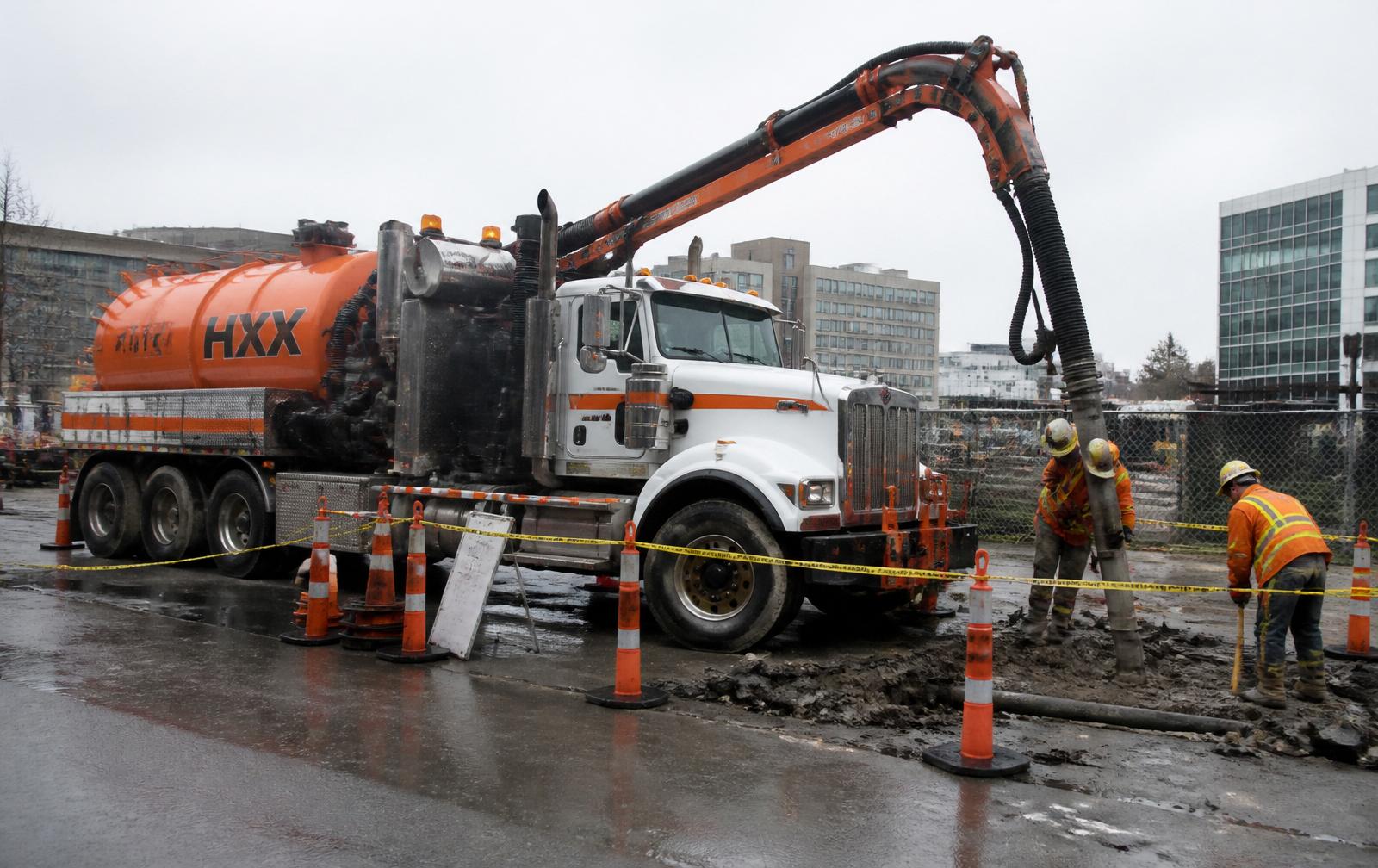
- Methods
- Hydro excavation (water) and dry/air vacuum excavation where required
- Typical work
- Potholing, slot trenching, pit and pole-base excavation, debris removal
- Depth
- Routine exposures to standard utility depth; deeper by staged excavation
- Spoils
- Contained in the truck, hauled and disposed of by our crew
- Winter
- Heated water for frost and frozen ground
- Restoration
- Backfill with flowable fill, stone, or native material; surface patched
What we use hydrovac for
- Exposing utilities before boring, trenching, or piling
- Test holes for design and survey (see potholing & daylighting)
- Slot trenching for conduit, cable, and grounding
- Pole, anchor, sign, and light-base excavation
- Cleaning out vaults, handholes, catch basins, and manholes
- Debris, slurry, and standing-water removal
Vacuum excavation vs. mechanical digging
Paint marks establish a tolerance zone, not a depth. A locate can be offset, a facility can be shallower than expected, and abandoned or unmarked lines are common in older corridors. Mechanical excavation inside that zone is how strikes happen — and a struck fiber trunk or gas main turns a small task into an outage, an evacuation, and a claim.
Vacuum excavation substantially reduces the risk of utility damage because nothing rigid enters the soil — provided pressure, nozzle distance, and dig sequence are controlled by the operator. The trade-off is throughput, which is why the right answer on most jobs is hydrovac inside the tolerance zone and conventional equipment outside it.
Support for drilling and construction crews
Our hydrovac trucks mobilize with our drill crews to pothole crossings, dig entry and exit pits, and vacuum drilling returns. We provide that same support to outside crews: standby hydrovac for a bore or trench day, pit digging ahead of a rig, or cleanup after a frac-out or a wet excavation.
- 01
Ticket and site review
One-call ticket confirmed, marks walked, access, water source, and spoil disposal confirmed.
- 02
Set up and contain
Truck positioned, work zone protected, traffic control placed if in the right-of-way.
- 03
Excavate
Water lance cuts, vacuum removes; soil profile watched the whole way down to the facility.
- 04
Record
Utility type, size, material, depth to top, and offset measured and photographed.
- 05
Backfill and restore
Backfilled per owner spec, compacted, and surface restored.
- Depth, offset, size, and material recorded per excavation
- Photo documentation of the exposed facility
- Test-hole data sheet for design use
- Spoil disposal handled and documented
What is the difference between hydrovac and vacuum excavation?
Vacuum excavation is the category; hydrovac is the water-based version of it. Air vacuum excavation is the dry alternative, used where spoil has to be reused or where water is a problem. Both help reduce the risk of utility damage because nothing rigid enters the soil, when performed with proper procedures and equipment settings — hydrovac simply cuts faster in the compact clay and till common across our region.
Is hydrovac safe around energized or pressurized lines?
It is the method utilities specify for exactly that situation. Pressure and nozzle distance are controlled to protect coating and insulation, and operators work the excavation down in stages rather than driving straight to depth.
Do you work in winter?
Yes. Heated water lets us cut frost and frozen ground through the Pennsylvania, Ohio, West Virginia, and New York winter, when mechanical excavation inside a tolerance zone is at its most dangerous.
Do you haul the spoils away?
Yes — slurry stays contained in the truck and is hauled and disposed of by our crew. Disposal is quoted with the work, not billed as a surprise.
Send us the excavation scope and get a real number.
Eagleway Communications LLC — Edinboro, PA. Serving Pennsylvania, Ohio, West Virginia, and New York.