Rock Drilling & Hard-Rock HDD
Shale, sandstone, and cobble are normal ground here. Bores through them need different tooling, a different fluid program, and honest production rates.
Across northwestern Pennsylvania, eastern Ohio, northern West Virginia, and the Southern Tier of New York, shallow bedrock is the rule rather than the exception. Bores that were bid as soft-soil work routinely hit shale, sandstone, or glacial cobble within a few feet of the surface.
Eagleway plans for rock instead of discovering it. When the alignment says rock, the bore is tooled, fluid-programmed, and scheduled as a rock bore from the start — which is the difference between a crossing that completes and a crossing that gets abandoned halfway.
Request a quote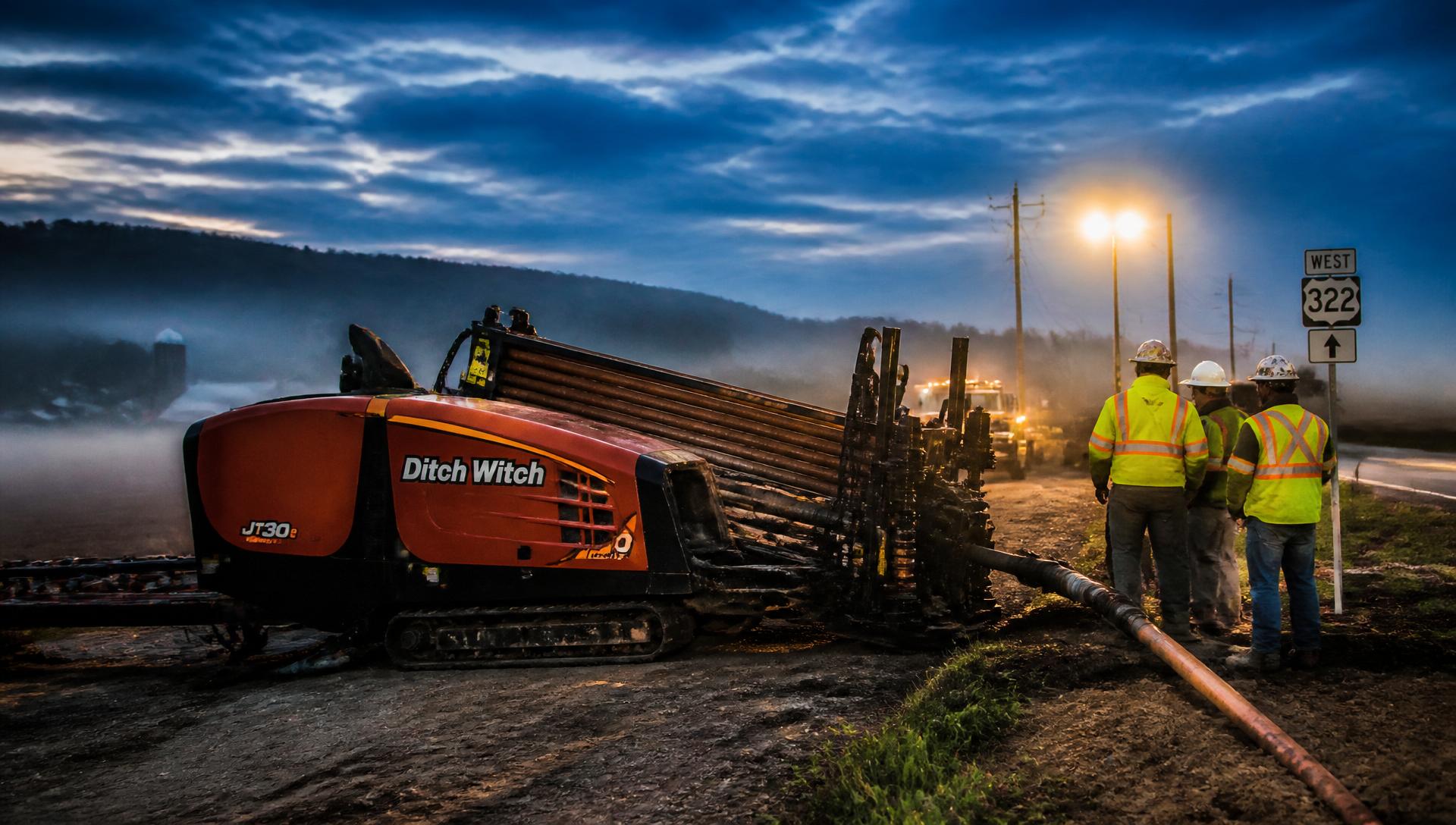
- Formations
- Shale, sandstone, siltstone, glacial cobble and boulder till
- Tooling
- Hard-rock tooling and air-hammer pilot setups; rock back reamers on the pullback
- Drilling mud
- Drilling mud system with a cuttings-transport program matched to the formation
- Steering
- Tracked pilot with logged depth and pitch — steering control is limited in rock, so the plan has to be right
- Production
- Quoted honestly per formation; rock footage is not soil footage
Where rock changes the plan
- Shallow bedrock forcing deeper entry angles to reach competent rock
- Transition zones — soil to rock — where steering wants to deflect
- Cobble and boulder till, which behaves unpredictably compared to solid rock
- Longer pilot times and back reaming that must be scheduled, not squeezed
- Fluid volumes and cuttings handling well beyond a soil bore
Rock geotechnical review
When boring logs or a geotech report exist for the corridor, we read them and price the bore off them. When they do not, we say so and either recommend test holes or price the crossing with rock contingency stated openly. A rock bore quoted at soil production rates is a change order waiting to happen, and everyone involved knows it.
Rock and product selection
Product pulled through rock takes abuse that soil bores do not inflict. We size the reamed hole with adequate over-cut, protect the leading edge of the bundle, and control pullback tension so the conduit arrives intact rather than gouged or over-stressed.
Can you bore through solid rock?
Yes — with hard-rock tooling or an air-hammer setup, rock back reamers, and a drilling mud program built for cuttings removal. What changes is production rate and cost per foot, not feasibility.
How do you price a bore when you do not know if there is rock?
We state the assumption. Either the crossing is priced with a rock contingency and a defined unit rate, or we recommend test holes first. We do not bid soil rates on ground we have not verified.
Is rock drilling louder or more disruptive?
The surface footprint is the same — entry and exit pits. The crossing simply takes longer, which matters most on permits with restricted work windows.
Send us the bore and ground conditions and get a real number.
Eagleway Communications LLC — Edinboro, PA. Serving Pennsylvania, Ohio, West Virginia, and New York.